
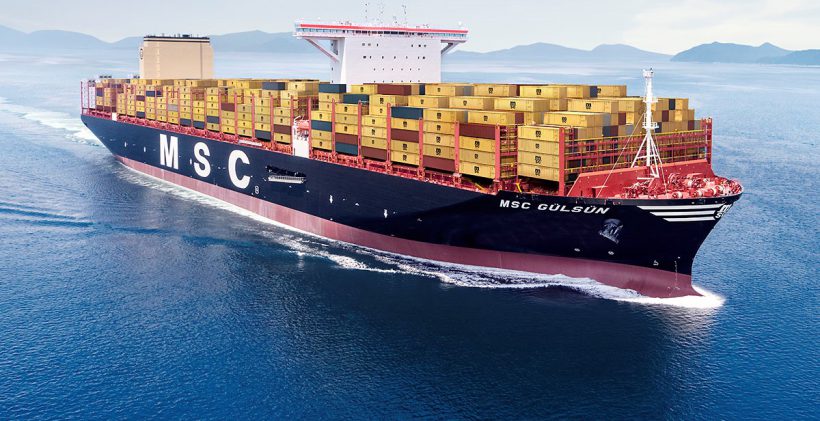
The transportation market is reeling from the risk of declining demand due to the impact of the new U.S. tax policy, with data showing a sharp drop in shipping orders and the maritime sector facing widespread cancellations.

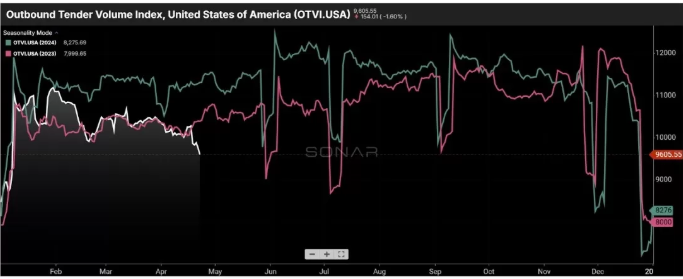
Until just a few days ago, despite fluctuations in trade policy and financial markets, data from SONAR had not shown significant changes in transportation demand—as measured by tender volume. However, that has changed. In recent days, the number of electronic orders from shippers to carriers has dropped sharply, no longer maintaining levels comparable to two years ago (with 2023 volume shown as the red line on the chart). Currently, order volume is down 14.9% compared to the same period last year and 7.6% compared to the same period two years ago. A deeper analysis by trailer type shows that the dry van segment has been hit the hardest, with a 17.6% decline year-over-year, while the reefer segment—typically less affected by market cycles—has only seen a 2% decrease.
Over the past week, maritime freight market data has become a focal point in industry media as well as in inquiries from SONAR’s clients. Clearly, booking volumes for shipments from China to the U.S. are declining, although different data sources report varying degrees of the drop. SONAR indicates a 25% decrease in bookings, while another source recorded a drop of over 60% within just one week—from the last week of March to the first week of April. A research report from The Wall Street Journal, citing the Port of Los Angeles, stated that cargo volume at the port is expected to fall by 9% in May compared to the same period last year, largely due to 20% of scheduled sailings being canceled (blank sailings).
This year’s trend in ocean freight rates has generally been downward. However, SONAR data shows that spot rates are rebounding on some routes. For example, rates from Vietnam to the Port of Los Angeles have risen by about 18% compared to last month. Rates have also increased on the Far East–Northern Europe route, potentially exacerbating congestion at ports in the Netherlands. After the U.S. announced a 90-day extension on tariffs for countries other than China, ocean bookings from other Asian nations rebounded—believed to be the main driver behind the recent rise in spot rates. This trend may continue through July, after which demand may decline and rates could plunge. Therefore, it can be argued that the current trade policy under the Trump administration runs counter to its stated goal of protecting domestic jobs.
SUN VN Transport recommends that businesses expedite exports to major U.S. ports before the 90-day tariff extension expires. Business leaders should prioritize negotiating and accelerating exports of aluminum products, aluminum-based goods, and electronic components, as these are among the country’s key export items.
Contact for more details: info@suntransco.com https://suntransco.com/vi/2025/03/26/gui-hang-di-my/