

The International Maritime Organization (IMO) has approved the first-ever legal framework to achieve net-zero greenhouse gas (GHG) emissions in the global shipping industry. This framework, which includes mandatory emission caps and a global carbon pricing mechanism, is set to take effect in 2027.
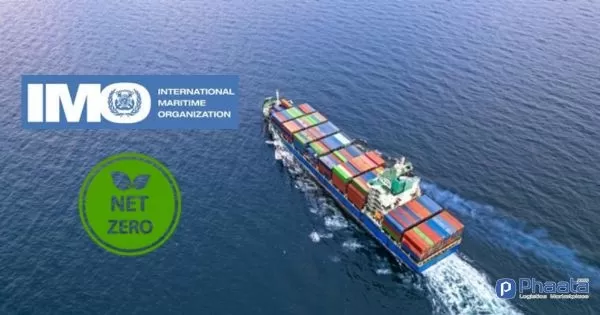
The IMO has made a significant advancement in its efforts to combat climate change by establishing a mandatory legal framework to reduce GHG emissions from ships, aiming for net-zero emissions by or around 2050.
This is the world’s first industry-wide framework combining mandatory emission limits with a global carbon pricing mechanism.
Endorsed by the Marine Environment Protection Committee (MEPC) at its 83rd session (MEPC 83), held from April 7–11, 2025, the new measures include a global fuel standard for ships and a worldwide emissions pricing mechanism.
These measures are expected to be formally adopted in October 2025 and come into force in 2027. They will be mandatory for ships above 5,000 GT, which represent approximately 85% of CO₂ emissions from international maritime transport.
At the conclusion of the session, IMO Secretary-General Arsenio Dominguez praised the spirit of collaboration and commitment among member states, stating:
“The approval of the draft amendments to MARPOL Annex VI, which establish IMO’s net-zero framework, marks another significant step in our collective efforts to combat climate change, modernize shipping, and reaffirm IMO’s strong commitment to sustainability.
It is now crucial to continue working together, engaging in dialogue, and listening to one another to ensure successful adoption moving forward.”
Key Elements of the IMO Net-Zero Emissions Framework
The framework will be incorporated into a new Chapter 5 of Annex VI (Prevention of Air Pollution from Ships) under the International Convention for the Prevention of Pollution from Ships (MARPOL).
Annex VI currently has 108 member states, representing 97% of the world’s commercial fleet by tonnage, and already includes mandatory energy efficiency requirements for ships.
The framework supports the goals of the IMO’s 2023 GHG Strategy by accelerating the adoption of low- and near-zero-emission fuels and technologies, while promoting an inclusive and equitable transition.
Under the proposed regulations, ships will be required to comply with:
-
Global Fuel Standard (GFS) – Ships must annually reduce their GHG emission intensity, measured as emissions per unit of energy used (well-to-wake basis).
-
Global Economic Mechanism – Ships that exceed the GFS limit must purchase offset units to balance excess emissions, while ships using low- or zero-emission technologies will be financially rewarded.
Compliance Mechanisms
There are two GFS compliance targets:
-
Base Target
-
Direct Compliance Target – Achieving this earns “surplus units”
Ships exceeding emission limits can comply by:
-
Transferring surplus units from other ships;
-
Using stored surplus units;
-
Purchasing offset units via contributions to the IMO Net-Zero Fund.
The IMO Net-Zero Fund
This fund will collect proceeds from the emissions pricing mechanism and redistribute them to:
-
Reward low-emission ships;
-
Support innovation, research, infrastructure, and fair transitions in developing countries;
-
Finance training, technology transfer, and capacity-building;
-
Mitigate negative impacts on vulnerable states, such as small island developing states (SIDS) and least developed countries (LDCs).
Next Steps
Following approval, the draft amendments to MARPOL Annex VI will undergo the following stages:
-
October 2025 (MEPC/ES.2) – Formal adoption at a special MEPC session
-
Spring 2026 (MEPC 84) – Approval of detailed implementation guidelines
-
2027 – Entry into force after a mandatory 16-month period under MARPOL procedures
Other Outcomes from MEPC 83
The committee also addressed various environmental issues related to maritime operations, including:
-
Adoption of the 2025 Action Plan to Combat Marine Plastic Litter;
-
Progress on reviewing the Ballast Water Management Convention;
-
Approval of the North Atlantic as an Emission Control Area (ECA) and agreement on two Particularly Sensitive Sea Areas (PSSAs) off South America’s Pacific coast;
-
Approval of a roadmap for regulatory development of onboard carbon capture and storage systems (OCCS);
-
Approval of draft amendments to Regulation 27 of MARPOL Annex VI for IMO Data Collection System access;
-
Adoption of the 2021 Guidelines update on Carbon Intensity Indicator (CII – G3 Guidelines);
-
Endorsement of work to develop binding regulations on biofouling management to prevent the spread of invasive aquatic species.
Contact:
Email: ruby.nguyen@sunstransco