
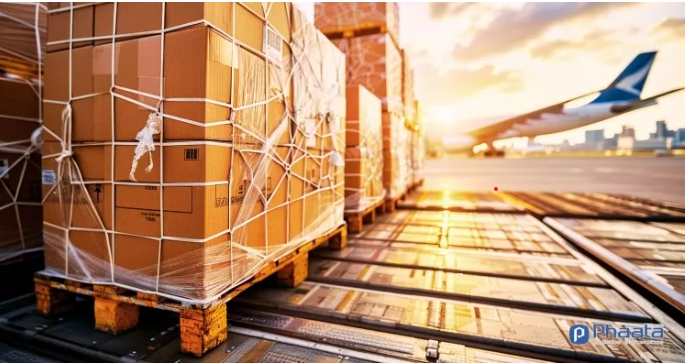
The US’s official removal of the de minimis threshold for imports from China is putting the global air cargo market at risk of a sharp decline in demand and creating an unprecedented chain of impacts on e-commerce and logistics.
Global air cargo volumes in April increased +4% compared to the same period last year. However, the US’s official removal of the de minimis threshold for shipments from China from today (May 2), combined with an uncertain macroeconomic context, is posing a big question for the air cargo market in 2025: “How bad will it be?”, according to market analysis firm Xeneta.
Weak demand in April and downward pressure on prices
Global air freight rates rose just +3% year-on-year in April – the second consecutive month of single-digit increases, indicating a weakening demand trend. At the same time, jet fuel prices fell -24% year-on-year in the first three weeks of April – helping to keep a lid on the rate increases.
Capacity increased slightly by +3% compared to April 2024, but the dynamic load factor – a measure of capacity utilization – fell 3 percentage points month-on-month to 57%.
The US tariffs announced on April 2 – dubbed “Liberation Day” – triggered a surge in air freight from several Asian countries to North America, leading to double-digit increases in volumes and rates. Southeast Asia – North America increased +13% m/m, while Northeast Asia – North America increased +10%. However, these increases began to reverse in the second half of April after the US announced a 90-day tariff delay and retaliatory tariffs of +145% on China.
North America – Northeast Asia recorded the largest monthly increase (+14%) as exporters rushed to deliver cargoes to China and Hong Kong before the tariffs took effect.
In other trades, spot rates from the Middle East & Central Asia to Europe remained unchanged m/m but fell sharply -26% y/y due to reduced supply pressure from the Red Sea disruption earlier this year. The Westbound transatlantic route fell -7% MoM, due to increased summer capacity and a slowdown due to Easter and the threat of tariffs from the US.
The Northeast Asia-Europe route recorded a slight price increase and increased +10% YoY. However, the opposite direction fell sharply -17% YoY due to trade imbalances.
Wait and see how big the “storm” is
According to Mr. van de Wouw, April data is not enough to reflect the year-end trend because all fluctuations are being “pushed back”. Businesses are trying to adjust to minimize the impact, but it is still unclear what the real consequences will be. He predicts that May will clearly show the level of disruption in the logistics chain due to the new policy.
“I wonder how many US consumers are aware there was a de minimis rule and that now it has been revoked. But that’s about to change. One industry colleague from Cirrus Global Advisors in the US posted earlier this week that the ‘best-selling’ item from China, a $19.49 power surge protector, was $48.38 in his Temu shopping basket by the time shipping and import taxes had been added. His message, quite correctly, is that the days of free shipping from China are over,” he said.
While previous forecasts had air cargo demand growing 4–6% in 2025 after double-digit growth in 2024, he said it was “meaningless” to revise the forecast now.
“Lower rates may be good news for carriers, but if goods are unsold because of high tariffs, that’s bad news for the economy and air cargo demand. For most goods, lower rates don’t offset the current tariffs.”
Now all eyes are on e-commerce.
“This is quite likely the calm before the storm. If the new de minimis set-up remains – and why would they change it after the investment the authorities have reportedly made – then this will undoubtedly negatively impact airfreight volumes from China to the US. The traditional airfreight market will not be able to compensate for the decline in e-commerce volumes. Airlines will adjust their networks to this new reality and this, in turn, will have a beneficial impact for shippers around the world as they will see more capacity coming (back) to their market – but they still need viable trading conditions to enjoy the benefit of this opportunity.”
By Phaata: “How bad will it get?” – Airline market awaits impact from tariffs and de minimis policy changes
Contact for more detail: michelle.huynh@suntransco.com
Visit our website: GỬI HÀNG ĐI MỸ NHANH – RẺ – AN TOÀN | SUN VN
