
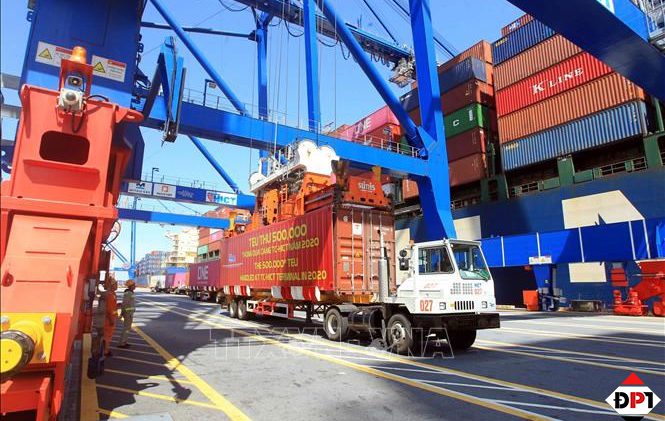
Despite the intensifying U.S.–China trade war, container shipping rates on the trans-Pacific route have remained remarkably stable. This resilience is attributed to agile capacity management strategies by shipping lines and a shift in sourcing to Southeast Asian markets.

The imposition of a minimum 145% tariff on all Chinese imports has led many U.S. importers to cancel or delay shipments, according to Judah Levine, Head of Research at freight analytics firm Freightos. This sudden shift reflects importers’ hopes that bilateral negotiations may eventually ease the tensions and revise tariffs—though official talks have yet to begin.
Levine reported a sharp drop in demand for sea freight between China and the U.S., with volume declines ranging from 30% to over 50% in recent weeks. Gene Seroka, Executive Director of the Port of Los Angeles, told CNBC that cargo throughput could drop by as much as 35% in the coming week. In response, carriers have implemented aggressive measures to balance supply and demand, including widespread blank sailings and temporary suspension of services.
Projections indicate that about 28% of shipping capacity on trans-Pacific routes to the U.S. West Coast and 42% to the East Coast will be cut in the coming weeks, according to Levine.
Some U.S. importers, previously reliant on Chinese goods, have been able to weather the short-term disruption thanks to stockpiled inventories built up in anticipation of tariff hikes. However, if high tariffs persist, American consumers may face shortages—especially in key product categories such as toys, baby products, and sports equipment. Consequently, retail prices may surge as importers absorb the cost of increased duties.
Interestingly, the capacity reduction is smaller than the decline in demand for China–U.S. trade. Levine explains that this gap stems from increased cargo volumes from other East Asian countries, which often share shipping services with Chinese freight on trans-Pacific routes. Exporters in these countries are accelerating shipments before a 90-day delay in retaliatory U.S. tariffs expires in July.
Levine also noted that freight forwarders are reporting a rise in trans-Pacific shipping demand from Southeast Asia, with bookings estimated to have increased by around 20% in recent weeks. This shift is helping offset the drop in Chinese shipments. Carriers may reallocate some of the cut capacity from China–U.S. routes to meet growing demand in Southeast Asia. However, rapid volume increases could lead to congestion, delays, and empty container shortages at alternative ports.
Despite major market disruptions, container freight rates have remained surprisingly stable. The anticipated wave of blank sailings is expected to help maintain pricing levels for exports from China, even as shipping volumes decline. In fact, trans-Pacific freight rates have only dipped slightly since early this month—even before the full wave of sailing cancellations takes effect.
Contact via email: ruby.nguyen@suntransco.com